Acids, Bases and Salts: A Family Resemblance
Acids donate hydrogen ions, bases accept them or provide hydroxide ions, and salts are what remain when the two meet. The family relationships of everyday chemistry.
Definitions that grow with you
The simplest picture says acids produce hydrogen ions in water and bases produce hydroxide ions, and it covers most school chemistry well. A broader definition, used at higher levels, calls any hydrogen ion donor an acid and any hydrogen ion acceptor a base, which lets ammonia count as a base although it carries no hydroxide of its own: it takes a hydrogen ion from water and leaves a hydroxide behind. A still broader definition in terms of electron pairs exists beyond that. The definitions nest inside each other like dolls, each explaining everything the previous one did and a little more, which is a good model of how chemical ideas mature.
Neutralisation and salts
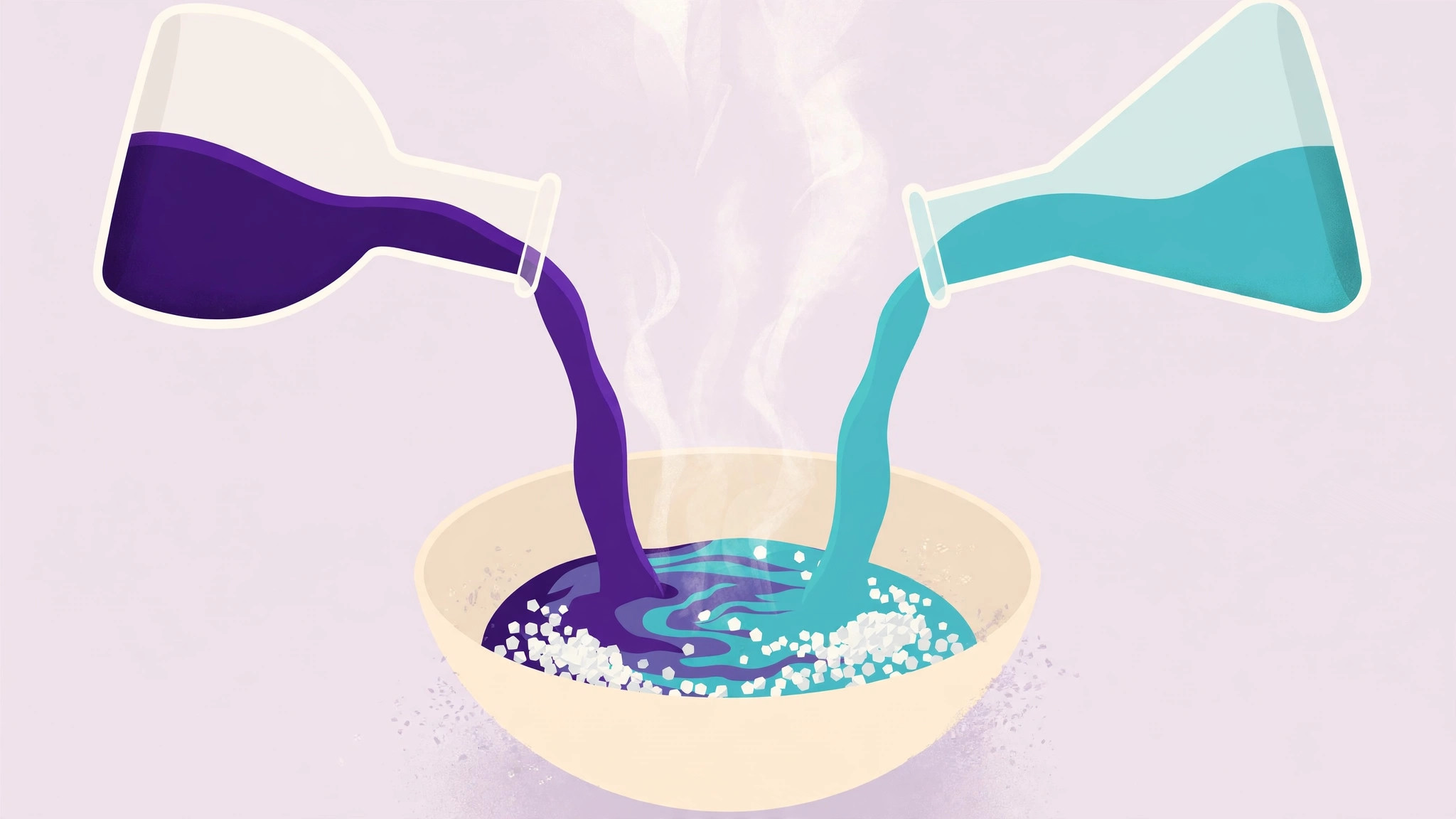
When an acid meets a base in the right proportions they neutralise: the hydrogen ions and hydroxide ions combine into water, and the remaining ions form a salt. Hydrochloric acid with sodium hydroxide gives sodium chloride, common salt, which is why salts carry their family names: chlorides from hydrochloric acid, sulfates from sulfuric acid, nitrates from nitric acid. The reaction releases heat, and the mixture at the exact neutral point contains the salt dissolved in water, nothing more dramatic than that. Antacid medicines, liming of acidic soils and treatment of industrial effluent are all this same reaction wearing work clothes.
Amphoteric and awkward cases
Some substances refuse to pick a side. Aluminium oxide and zinc oxide react with both acids and bases, a behaviour called amphoteric, and water itself accepts or donates hydrogen ions depending on its company. Amino acids carry both an acidic and a basic group in one molecule, which is central to how proteins behave. These awkward cases are not exceptions to be excused; they are the evidence that acid and base are roles in a reaction rather than permanent identities. The pH tools on this site measure where a solution sits; understanding which role each substance is playing explains why it sits there. The litmus family of tests makes the family relationships visible. Red litmus turns blue in a base and stays red in an acid; blue litmus does the reverse, and universal indicator runs the full rainbow of the pH scale between them. These dyes are themselves weak acids or bases whose ionised and unionised forms have different colours, which is why they change exactly where the hydrogen ion balance tips. A substance that changes colour at a chosen pH is doing chemistry about chemistry, and choosing the right one for a titration, as the titration guide explains, is matching its tipping point to the reaction's.
Try it yourself
The calculator that goes with this guide is ready on the tools page.
Explore with the pH calculator