Guides
Plain guides on how chemistry calculations work, each with its own original illustration. 52 guides are published so far, and more are added in batches.

What Is a Mole in Chemistry?
The mole is chemistry's counting unit. What it means, why chemists need it, and how it links the mass on a balance to the particles in a sample.
Read the guide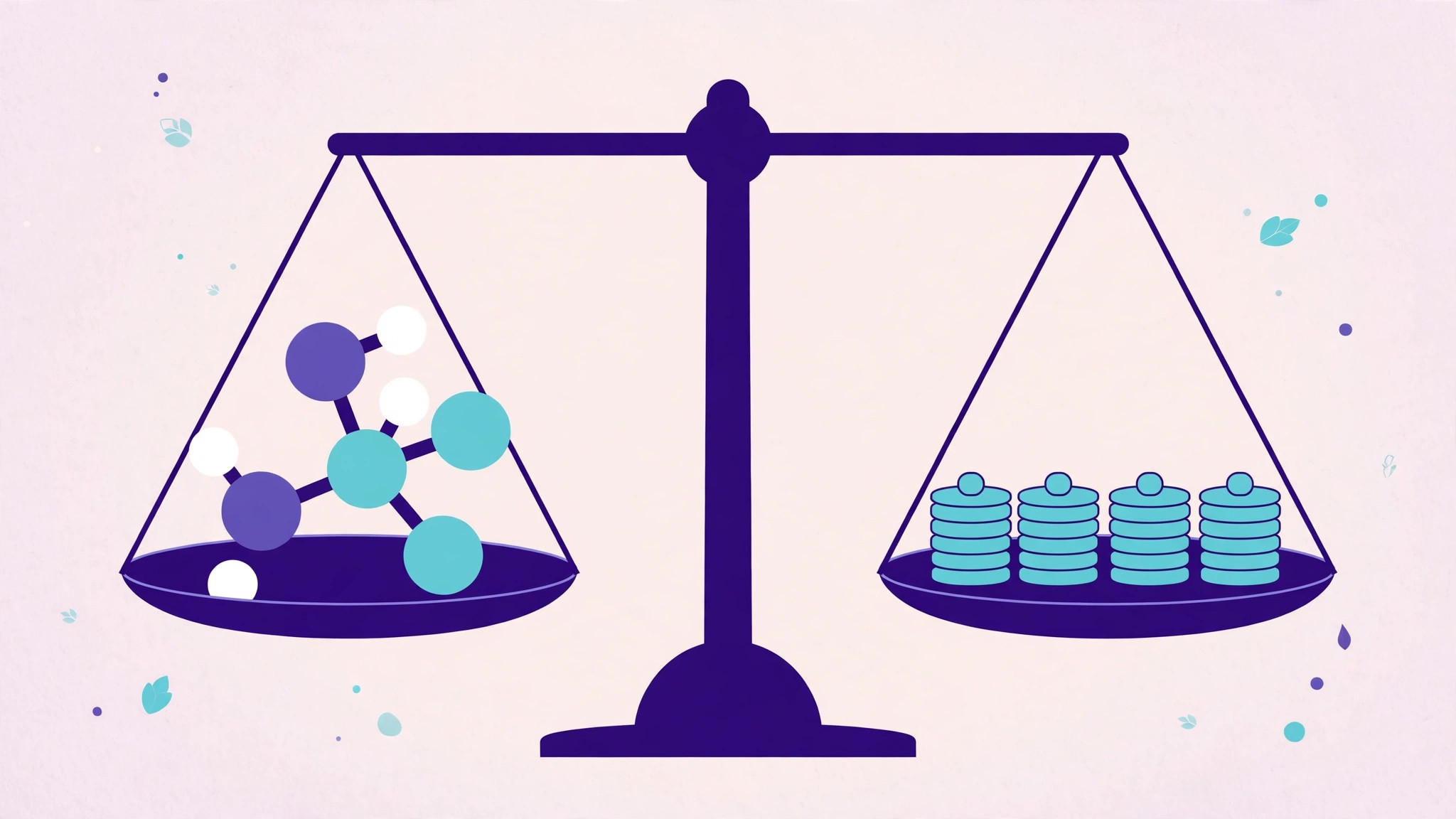
Molar Mass Explained: Reading a Formula Like a Chemist
Molar mass is the mass of one mole of a substance. How to work it out from a formula, why brackets matter, and how it is used in nearly every calculation.
Read the guide
Avogadro's Number: Counting Particles You Cannot See
Avogadro's constant links the mole to real numbers of atoms and molecules. Where the number comes from and how to use it in particle calculations.
Read the guide
Molarity Explained: Moles per Litre, Done Right
Molarity is the standard measure of concentration, moles per litre of solution. How it is defined, calculated and used when making and using solutions.
Read the guide
Dilution Explained: M1V1 = M2V2 in Practice
Dilution lowers a concentration by adding solvent. The M1V1 = M2V2 relationship, how to use it safely, and the serial dilutions used in real laboratories.
Read the guide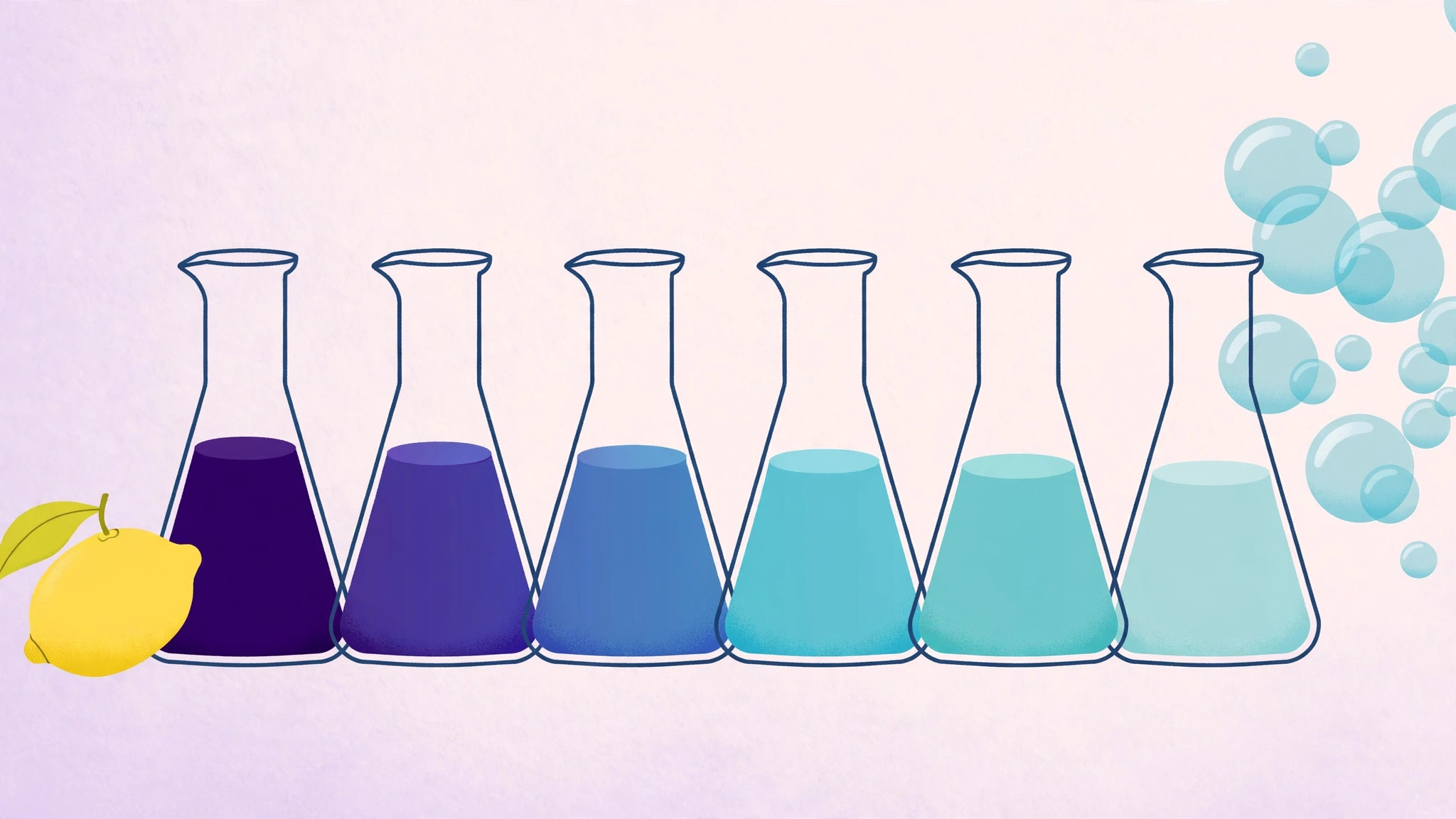
pH and pOH Basics: The Scales of Acidity
The pH scale measures acidity on a scale built from hydrogen ion concentration. What pH and pOH mean, how they connect, and how to convert between them.
Read the guide
Strong and Weak Acids: Strength Is Not Concentration
Strong acids ionise completely in water while weak acids only partly ionise. What the difference means for pH, conductivity and safe handling.
Read the guide
Titration Explained: Finding Concentration by Reaction
Titration finds an unknown concentration by reacting a solution against one of known strength. The method, the endpoint, and the calculation that follows.
Read the guide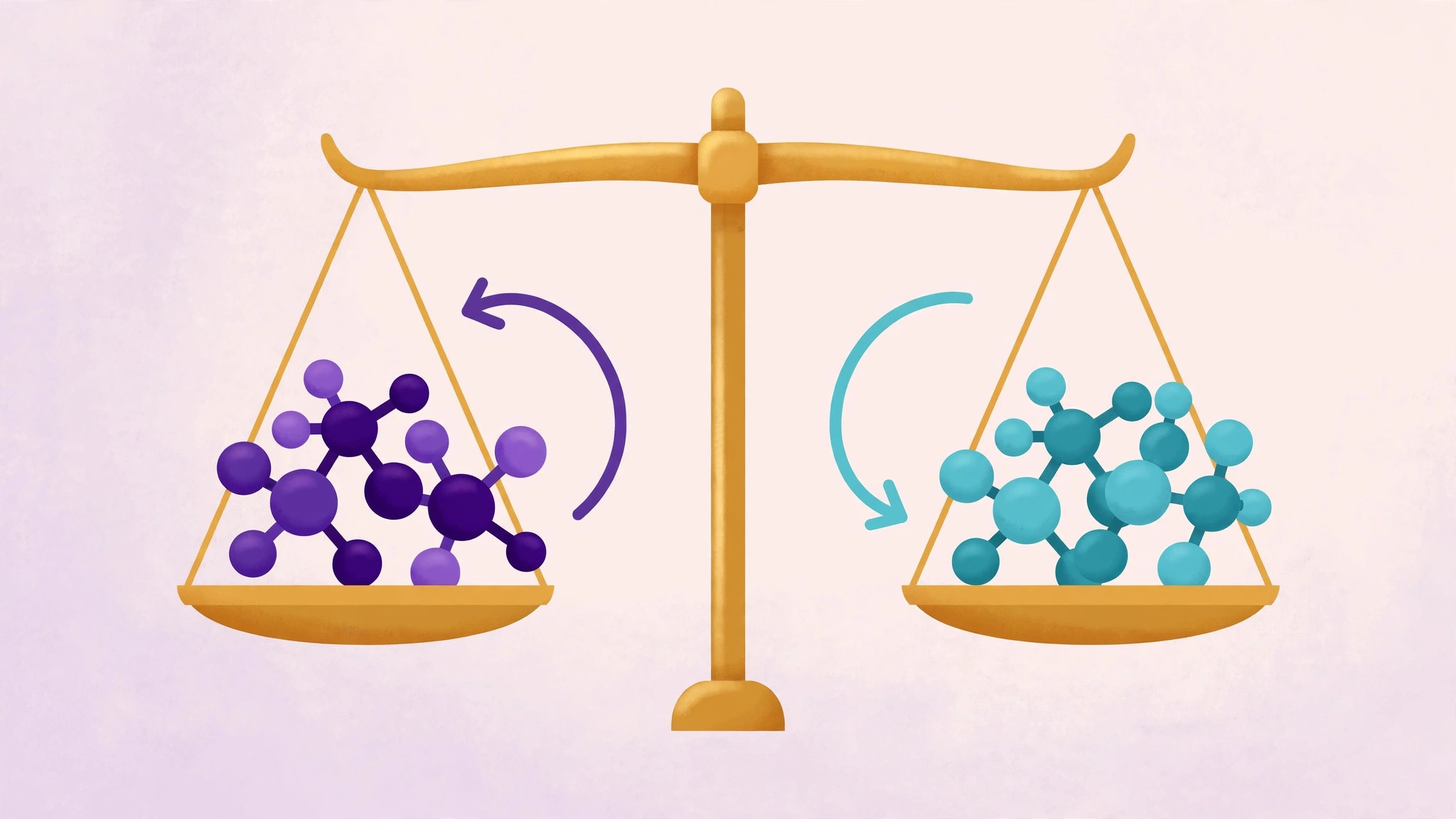
Chemical Equilibrium and Le Chatelier's Principle
Chemical equilibrium is a balance of two reactions running at once, not a stop. Le Chatelier's principle predicts how the balance shifts when conditions change.
Read the guide
Reaction Rates: Collisions With Consequences
Reaction rates measure how fast reactants turn into products. Collision theory explains the five factors that speed reactions up or slow them down.
Read the guide
Electrochemistry Basics: Chemistry That Carries Current
Electrochemistry studies the traffic between chemical reactions and electricity: cells that make current from reactions, and current that drives reactions.
Read the guide
Organic Chemistry: An Introduction to Carbon's Kingdom
Organic chemistry is the chemistry of carbon compounds, the largest family in the subject. Why carbon is special and how its compounds are organised.
Read the guide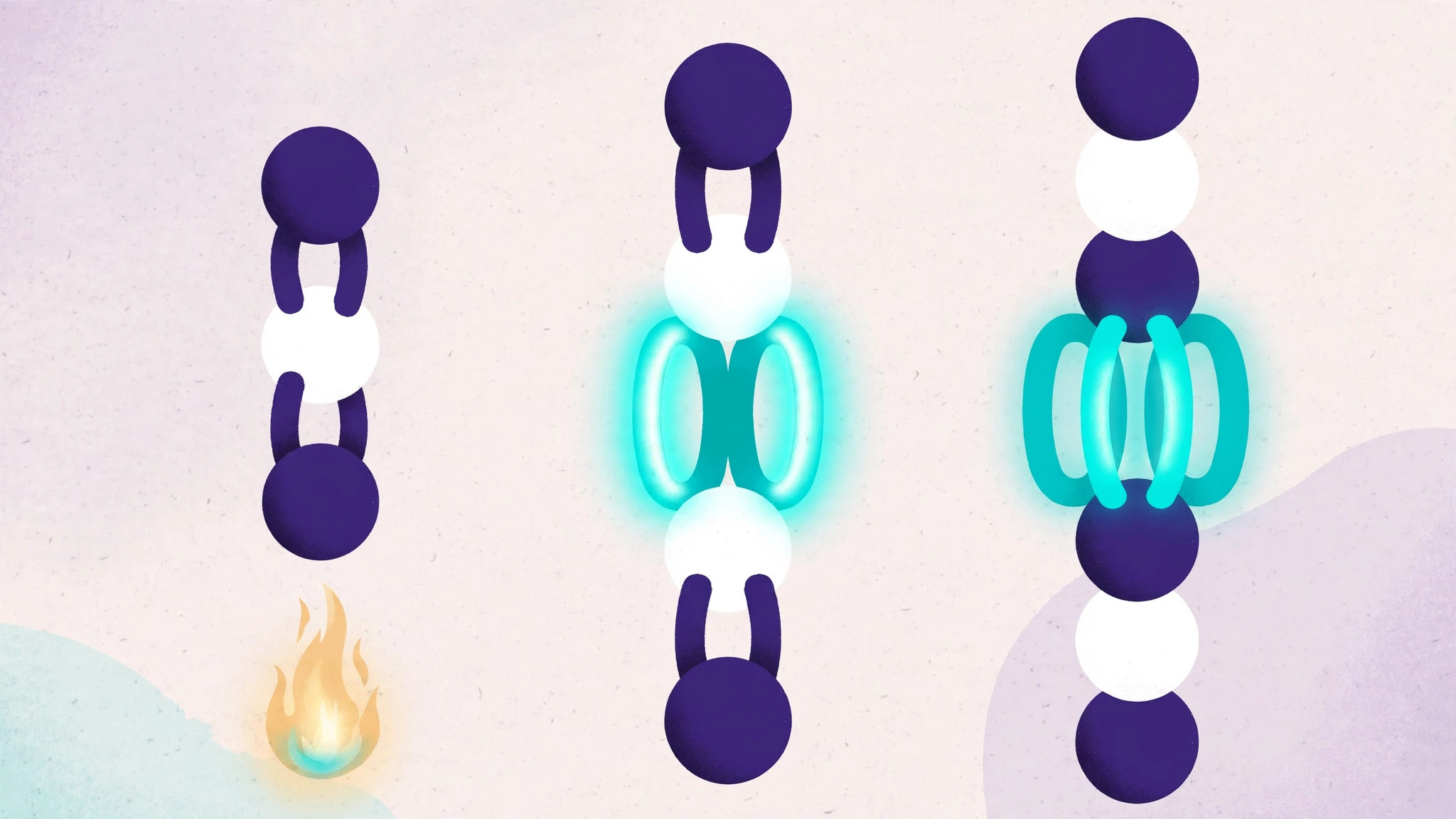
Hydrocarbons Explained: Alkanes, Alkenes and Alkynes
Hydrocarbons are compounds of carbon and hydrogen only: alkanes, alkenes and alkynes. Their formulas, their burning, and why the double bond changes everything.
Read the guide
Polymers in Daily Life: Chains That Changed the World
Polymers are giant molecules built from repeating units, and they make up plastics, fibres and much of biology. How they form and why they are hard to escape.
Read the guide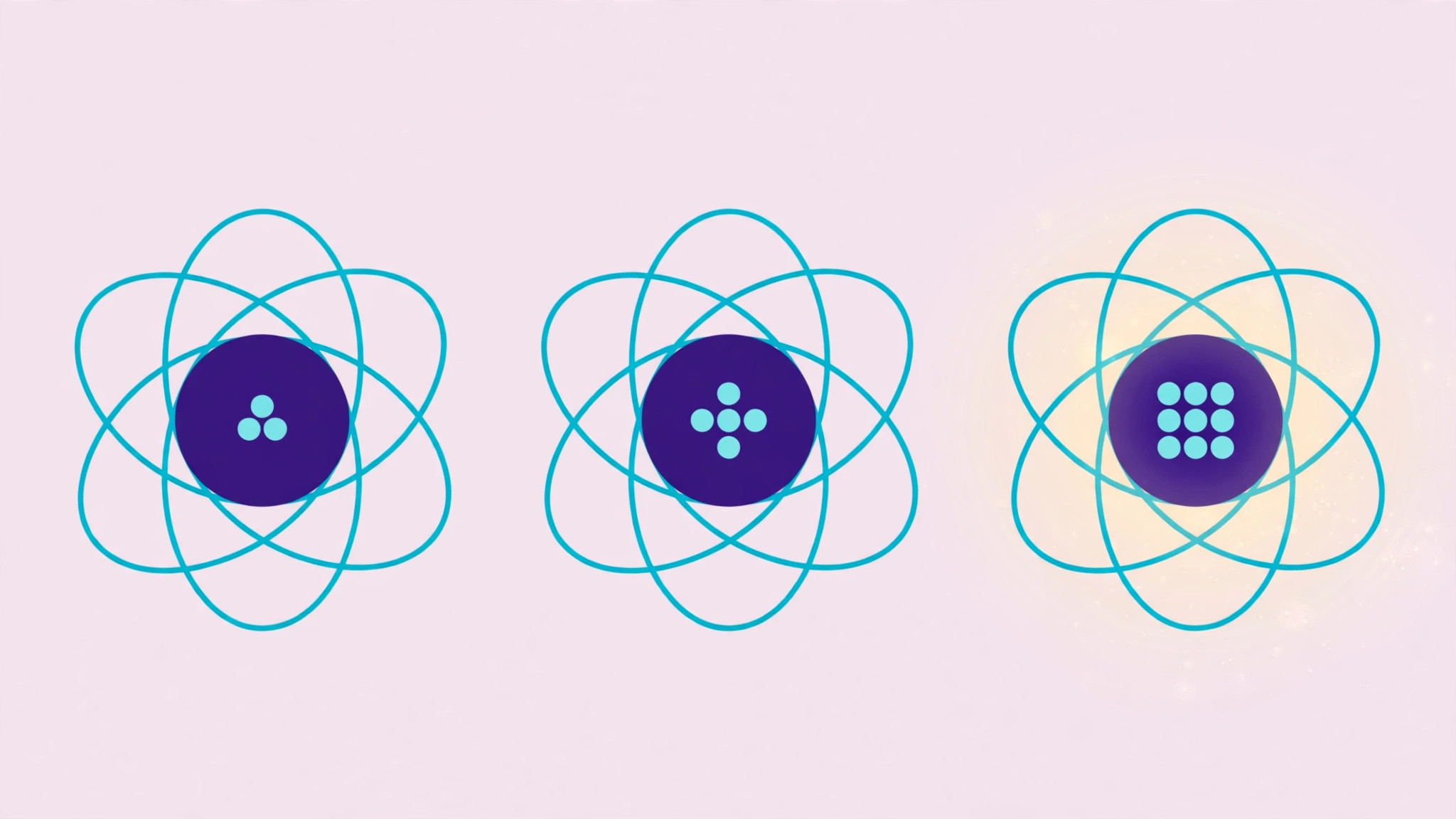
Isotopes Explained: Same Element, Different Neutrons
Isotopes are atoms of the same element with different numbers of neutrons. Why they share chemistry but differ in mass, stability and usefulness.
Read the guide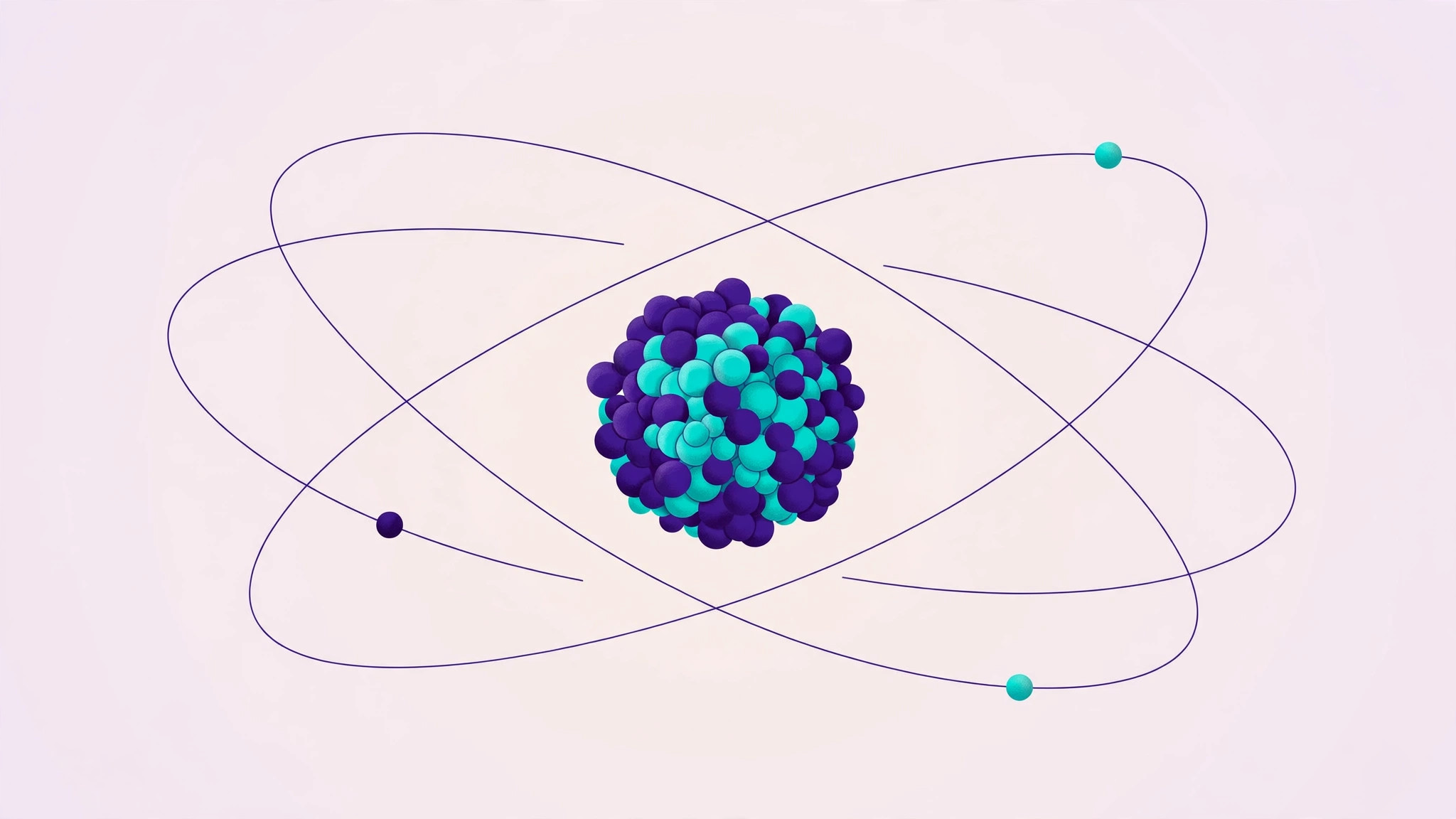
Atomic Structure: Protons, Neutrons and Electrons
Atomic structure is the arrangement of protons, neutrons and electrons in an atom. The particles, their charges and masses, and how the nucleus was discovered.
Read the guide
Electron Configuration: Where the Electrons Live
Electron configuration describes how electrons arrange themselves in shells around the nucleus. The filling order and how it explains the periodic table's shape.
Read the guide
Chemical Naming Basics: Names That Encode Formulas
Chemical names follow rules that encode the formula, and formulas encode the name. The naming system for ionic and covalent compounds, acids and common ions.
Read the guide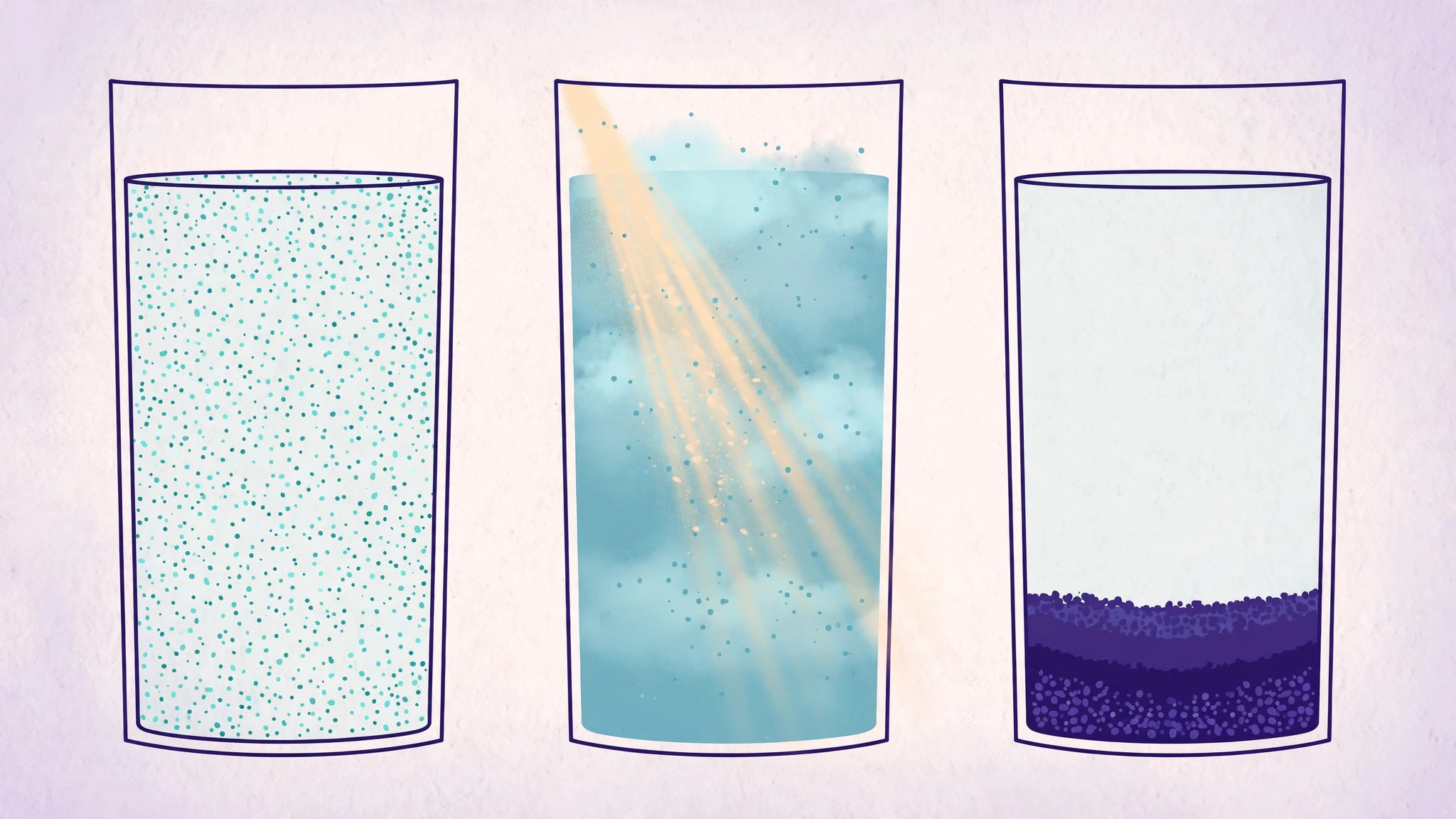
Solutions and Mixtures: Dissolving at the Particle Level
A solution is a mixture where one substance dissolves completely in another. Solutions, suspensions and colloids compared, and what dissolving really does.
Read the guide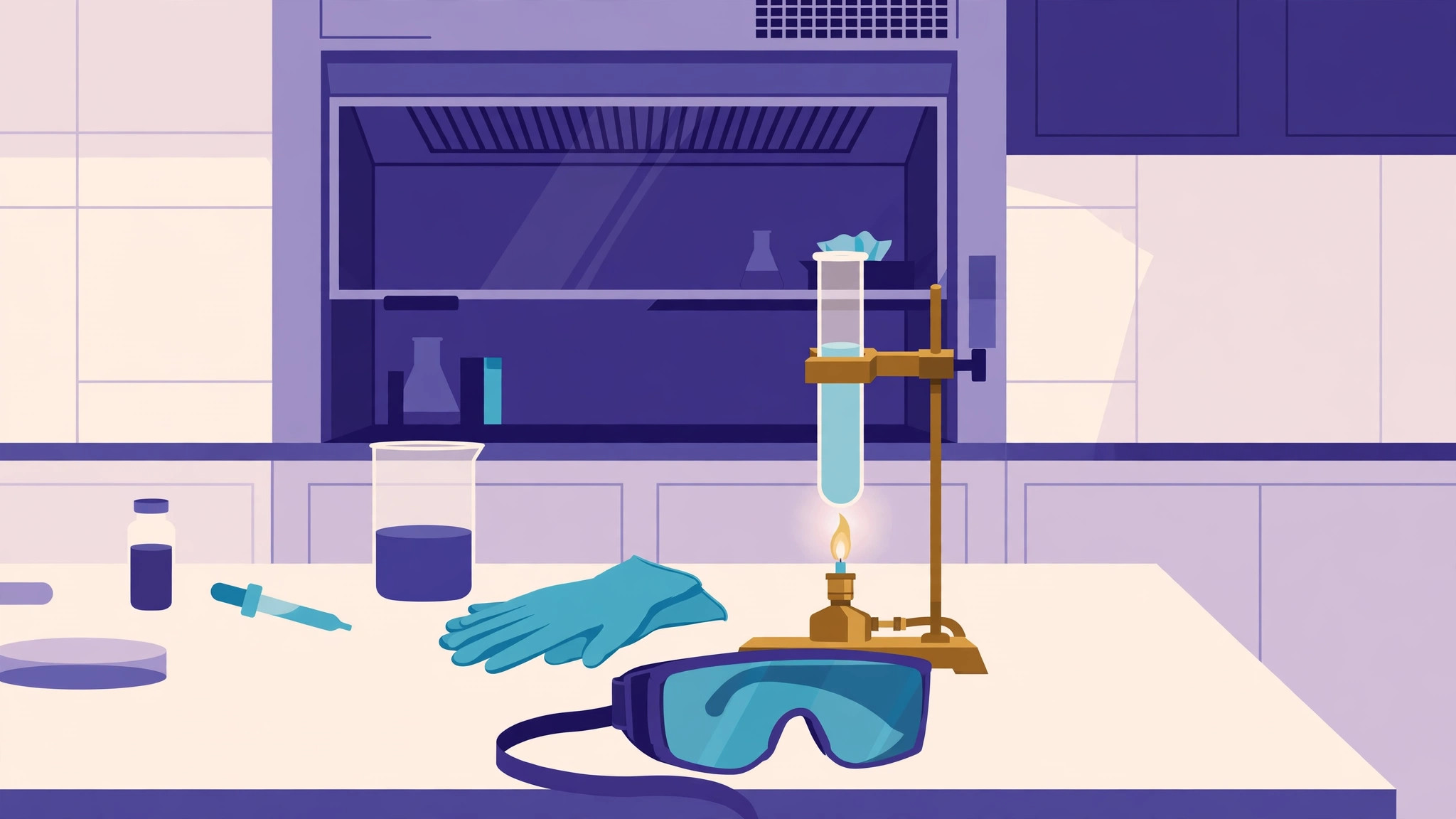
Laboratory Safety Basics: Habits That Protect
Laboratory safety is a set of habits built from other people's accidents. The core rules for eye protection, heating, chemicals and clear thinking at the bench.
Read the guide
Percent Composition: Who Owns the Mass?
Percent composition gives the mass share of each element in a compound. How it is calculated from a formula and from laboratory analysis, and why it matters.
Read the guide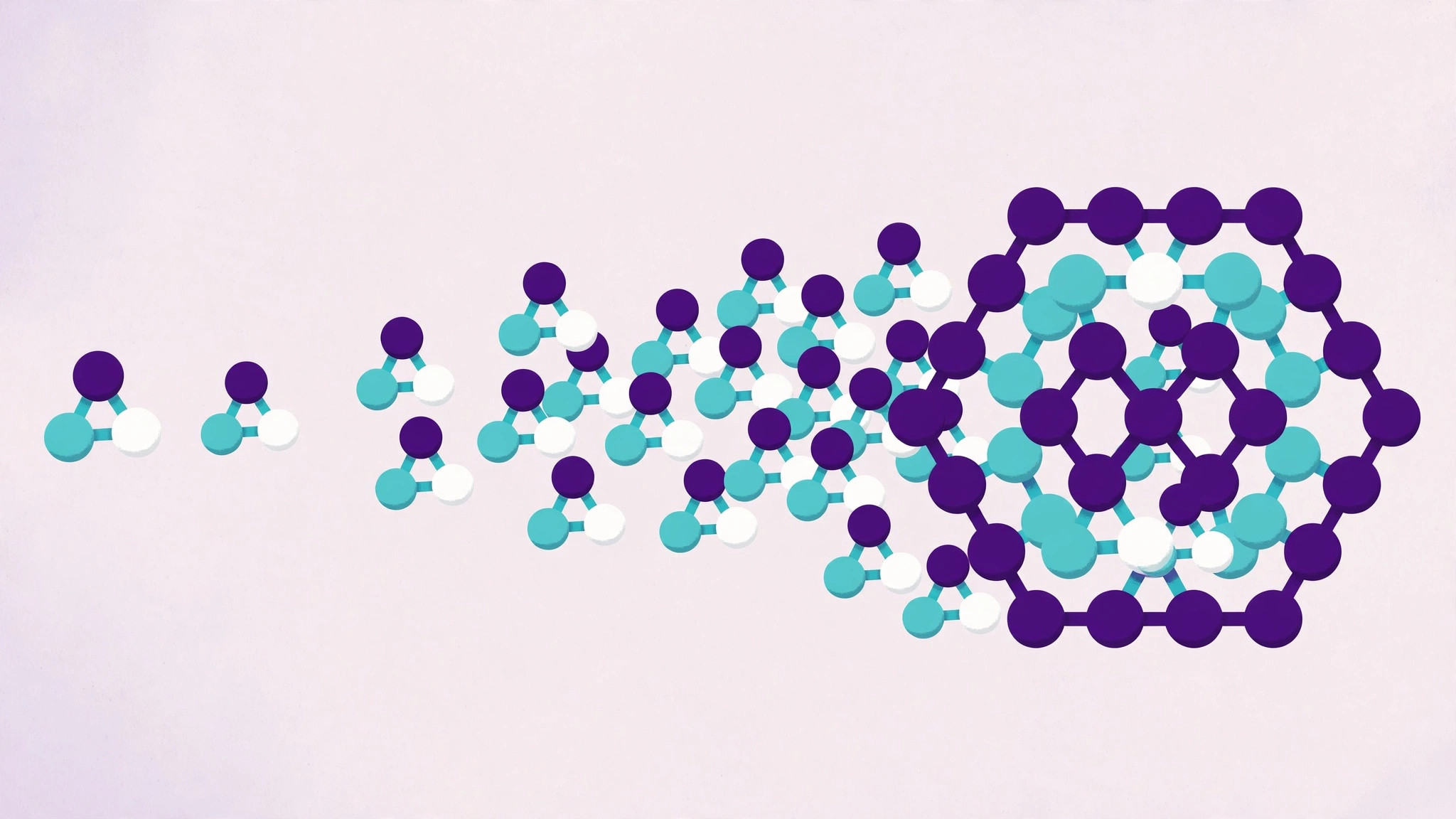
Empirical and Molecular Formulas: Ratio and Reality
The empirical formula is the simplest ratio of atoms in a compound; the molecular formula is the real count. How each is found and how they connect.
Read the guide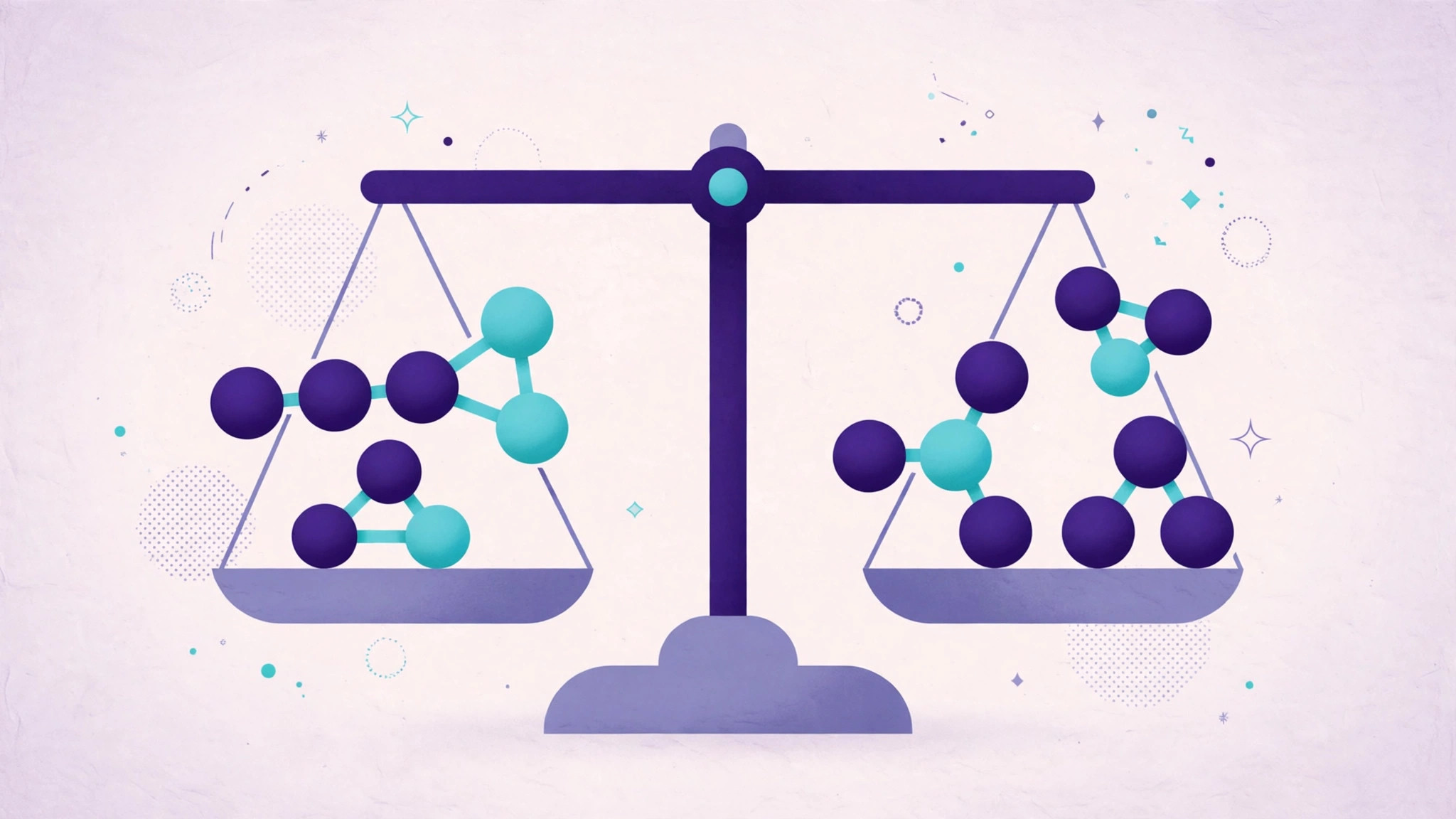
Balancing Chemical Equations: The Bookkeeping of Atoms
A balanced equation has the same number of every atom on both sides. Why equations must balance, and a reliable method for balancing them by inspection.
Read the guide
Stoichiometry Basics: The Recipe Written in Moles
Stoichiometry is the arithmetic of chemical equations: converting between amounts of reactants and products using the ratios in a balanced equation.
Read the guide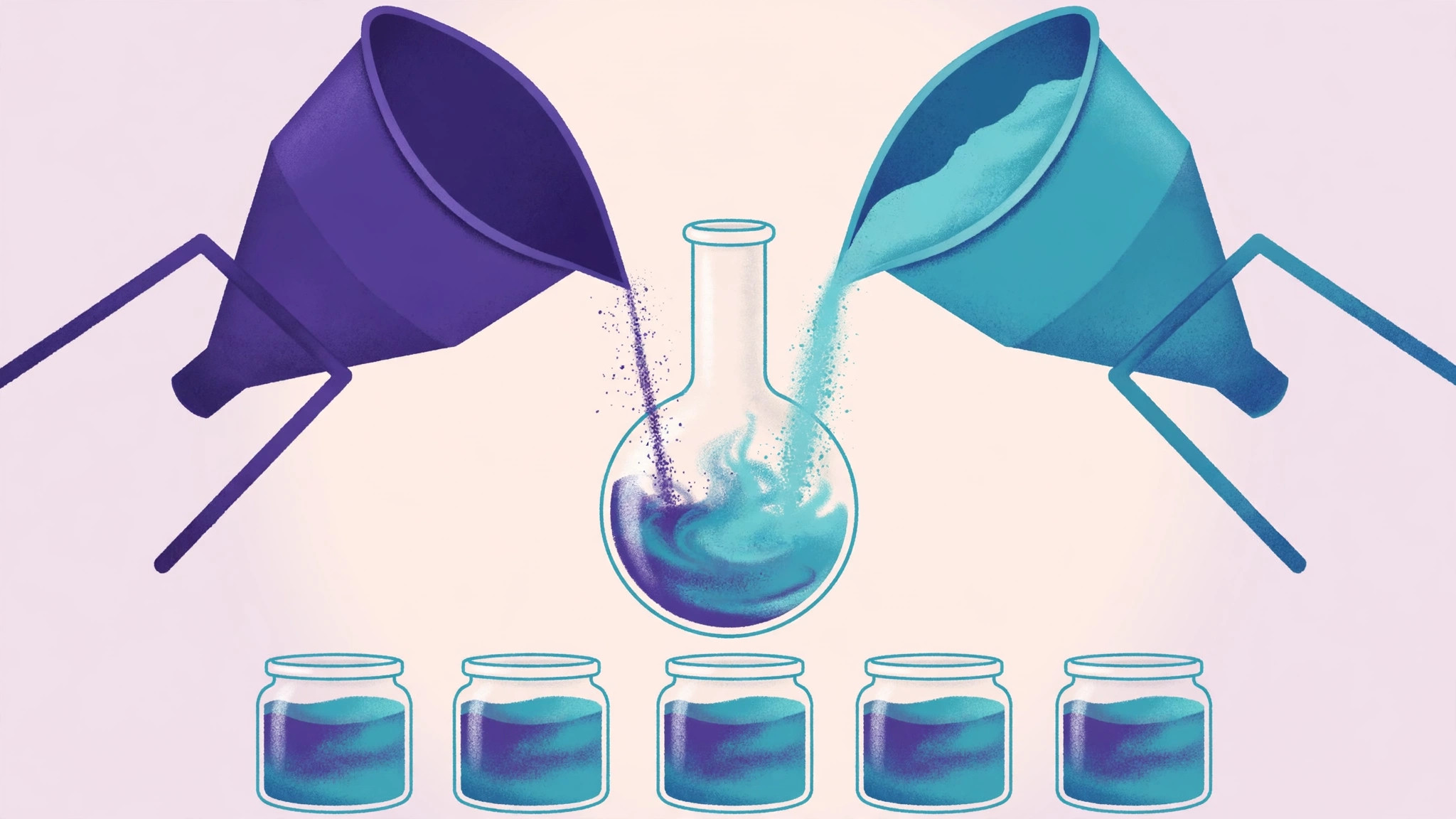
The Limiting Reactant: The Ingredient That Runs Out
The limiting reactant is the ingredient that runs out first and caps the amount of product. How to identify it and why the other reactant is left over.
Read the guide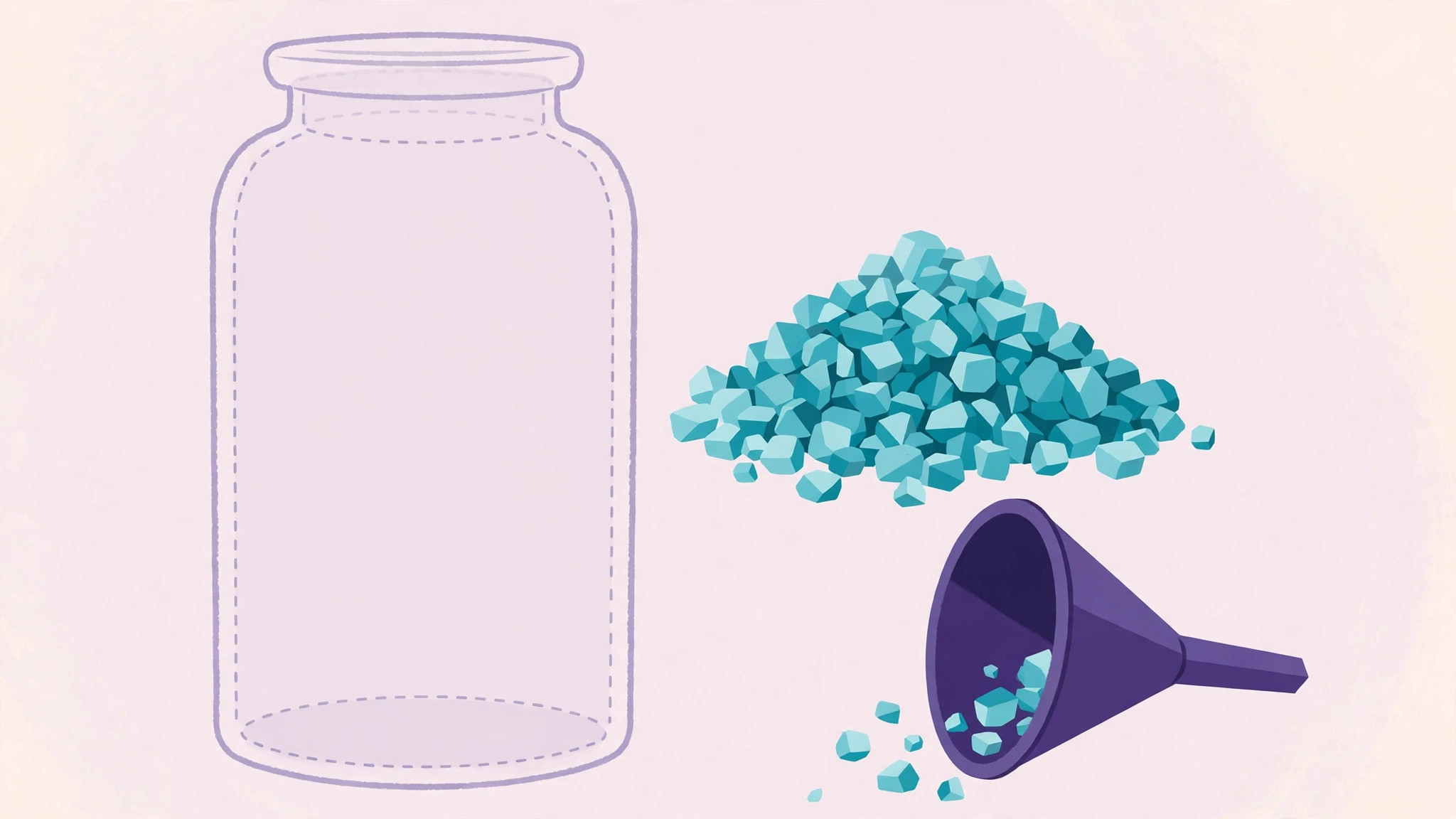
Percent Yield: Promised Product Versus Collected Product
Percent yield compares what a reaction actually produced with the most it could have produced. Why yields fall short and how the figure is used.
Read the guide
The Ideal Gas Law: PV = nRT and What It Demands
The ideal gas law, PV = nRT, ties together pressure, volume, amount and temperature. What each letter means, which units it demands, and when gases obey it.
Read the guide
Boyle's Law: Squeezing a Gas Pushes Back
Boyle's law links the pressure and volume of a gas at fixed temperature: squeeze a gas and its pressure rises in exact inverse proportion.
Read the guide
Charles's Law: Warm a Gas and It Grows
Charles's law links the volume of a gas to its absolute temperature at fixed pressure: warm a gas and it expands in direct proportion.
Read the guide
The Combined Gas Law: Everything Changing at Once
The combined gas law handles pressure, volume and temperature changing together for a fixed amount of gas, uniting Boyle's and Charles's laws in one ratio.
Read the guide
Dalton's Law: Every Gas Pays Its Share of Pressure
Dalton's law says the total pressure of a gas mixture equals the sum of the partial pressures of its parts. How partial pressure works and why divers care.
Read the guide
Density Explained: Mass Packed Into Volume
Density is mass divided by volume, a property that identifies substances, predicts floating and sinking, and links to the molar mass of gases.
Read the guide
Molality Versus Molarity: Volume or Mass in Charge
Molarity counts moles per litre of solution; molality counts moles per kilogram of solvent. Why chemistry keeps both, and when each one is the right choice.
Read the guide
PPM and PPB: Measuring the Almost Nothing
Parts per million and parts per billion measure the trace amounts too small for percentages: pollutants, minerals in water and contaminants in food.
Read the guide
Half-Life Explained: The Clock That Halves
Half-life is the time for half of a radioactive sample to decay. How the pattern works, why it never reaches zero, and how it dates ancient objects.
Read the guide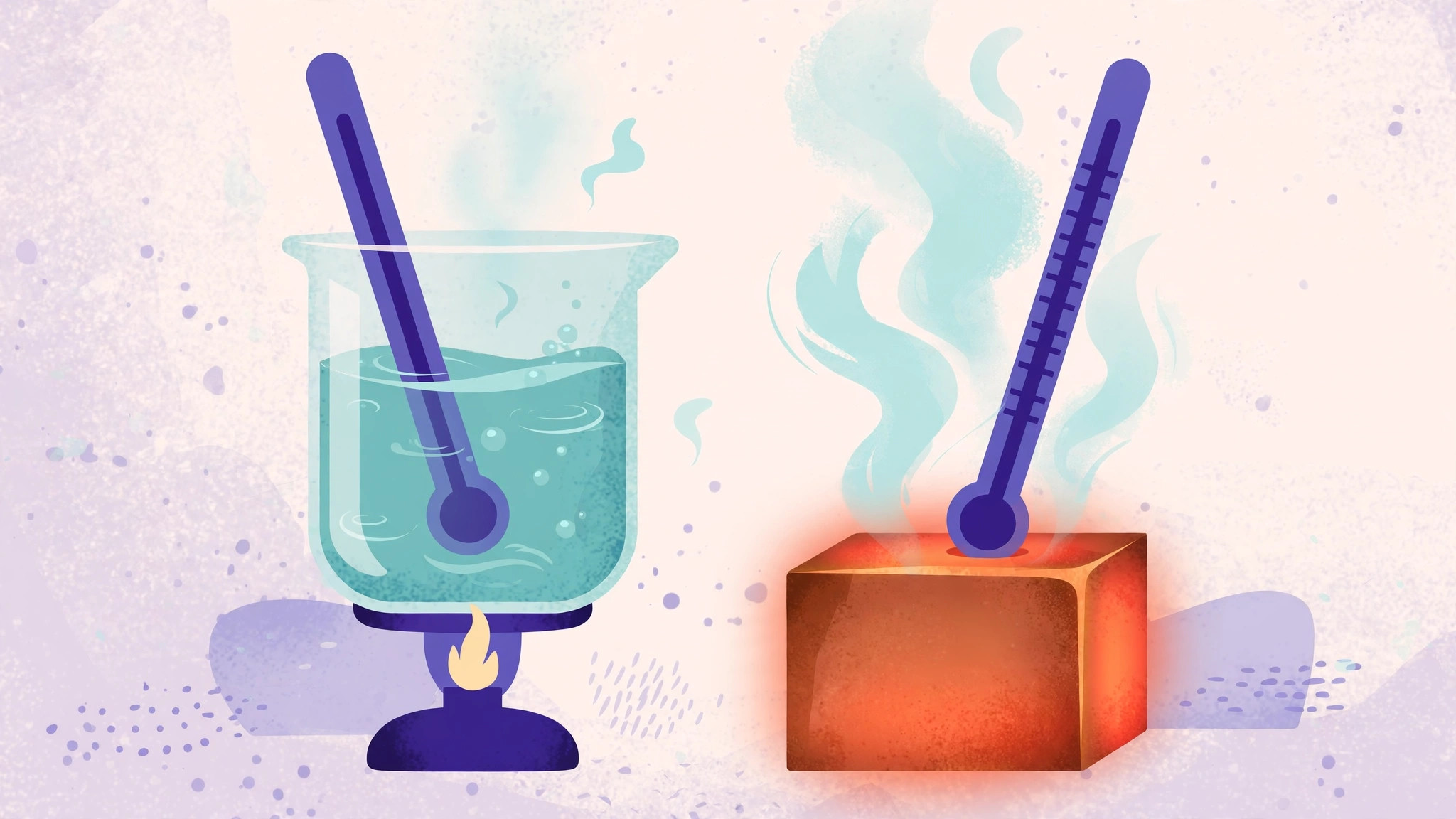
Specific Heat: The Price of Warming Up
Specific heat is the energy needed to warm one gram of a substance by one degree. Why water's value is so high, and how q = mc delta T is used.
Read the guide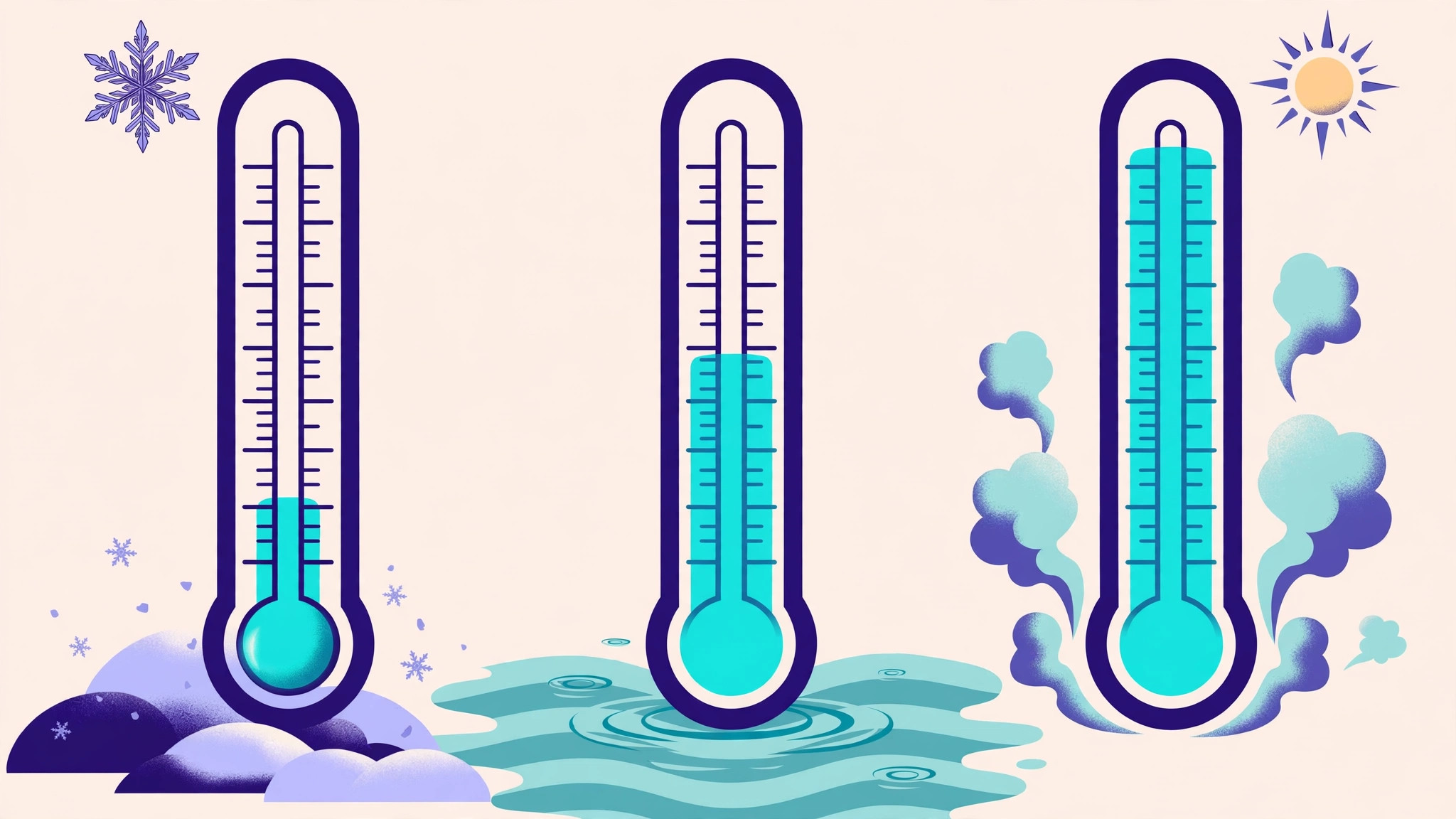
Temperature Scales: Celsius, Fahrenheit and Kelvin
Celsius, Fahrenheit and kelvin measure the same thing on three different rulers. Where each scale came from, and why chemistry insists on kelvin.
Read the guide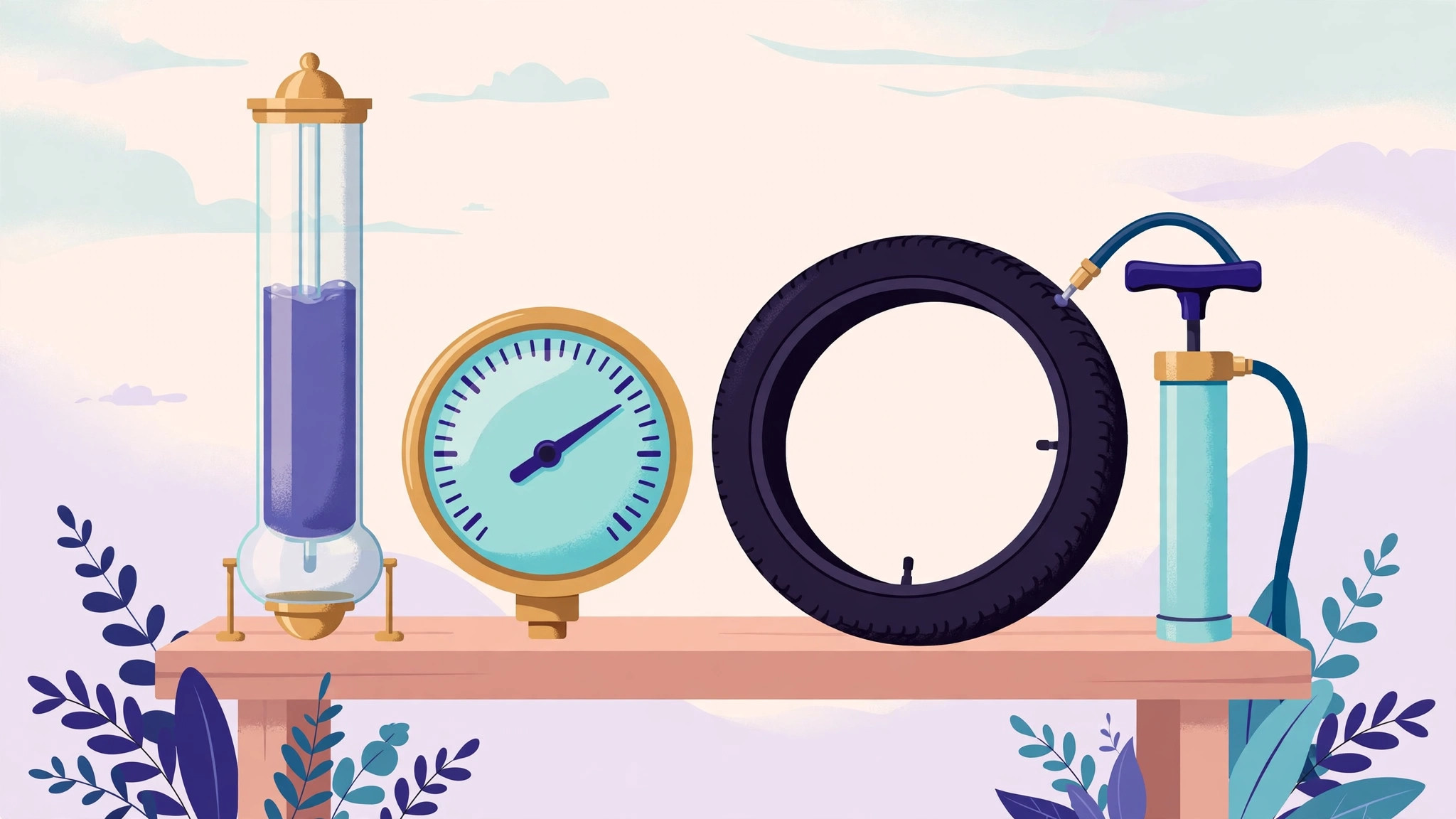
Pressure Units: Atmospheres, mmHg, Bar and the Rest
Pressure is measured in atmospheres, kilopascals, mmHg, bar and psi depending on where you stand. What each unit means and how to move between them.
Read the guide
Significant Figures: Digits That Tell the Truth
Significant figures report how much a measurement can honestly claim. The rules for counting them and for rounding answers in chemistry calculations.
Read the guide
Scientific Notation: Chemistry's Native Number Format
Scientific notation writes very large and very small numbers as a coefficient times a power of ten. The system chemistry runs on, from atoms to Avogadro.
Read the guide
Atoms, Molecules and Ions: Three Kinds of Particle
Atoms, molecules and ions are the three kinds of particle chemistry counts. How they differ, and why the distinction decides how substances behave.
Read the guide
Reading the Periodic Table: A Map That Predicts
The periodic table organises every element by atomic number into rows and columns with repeating patterns. How to read it and what its layout predicts.
Read the guide
Ionic and Covalent Bonds: Transfer or Share
Ionic bonds transfer electrons between atoms; covalent bonds share them. How the two bond types form and how they decide a substance's properties.
Read the guide
Oxidation Numbers: Bookkeeping for Electrons
Oxidation numbers are a bookkeeping system for electrons in compounds. The rules for assigning them and what they reveal about redox reactions.
Read the guide
Acids, Bases and Salts: A Family Resemblance
Acids donate hydrogen ions, bases accept them or provide hydroxide ions, and salts are what remain when the two meet. The family relationships of everyday chemistry.
Read the guide
Buffers Explained: Shock Absorbers for pH
A buffer holds a solution's pH nearly steady while acid or base is added. How buffers work, and why blood, shampoo and laboratories all depend on them.
Read the guide
Solubility Rules: What Dissolves and What Falls Out
Solubility rules predict which ionic compounds dissolve in water and which form precipitates. The short list worth learning and how it is used.
Read the guide
Concentration Units Compared: One Idea, Many Currencies
Molarity, molality, percent by mass, ppm and mole fraction all measure concentration in different currencies. A comparison to end the confusion between them.
Read the guide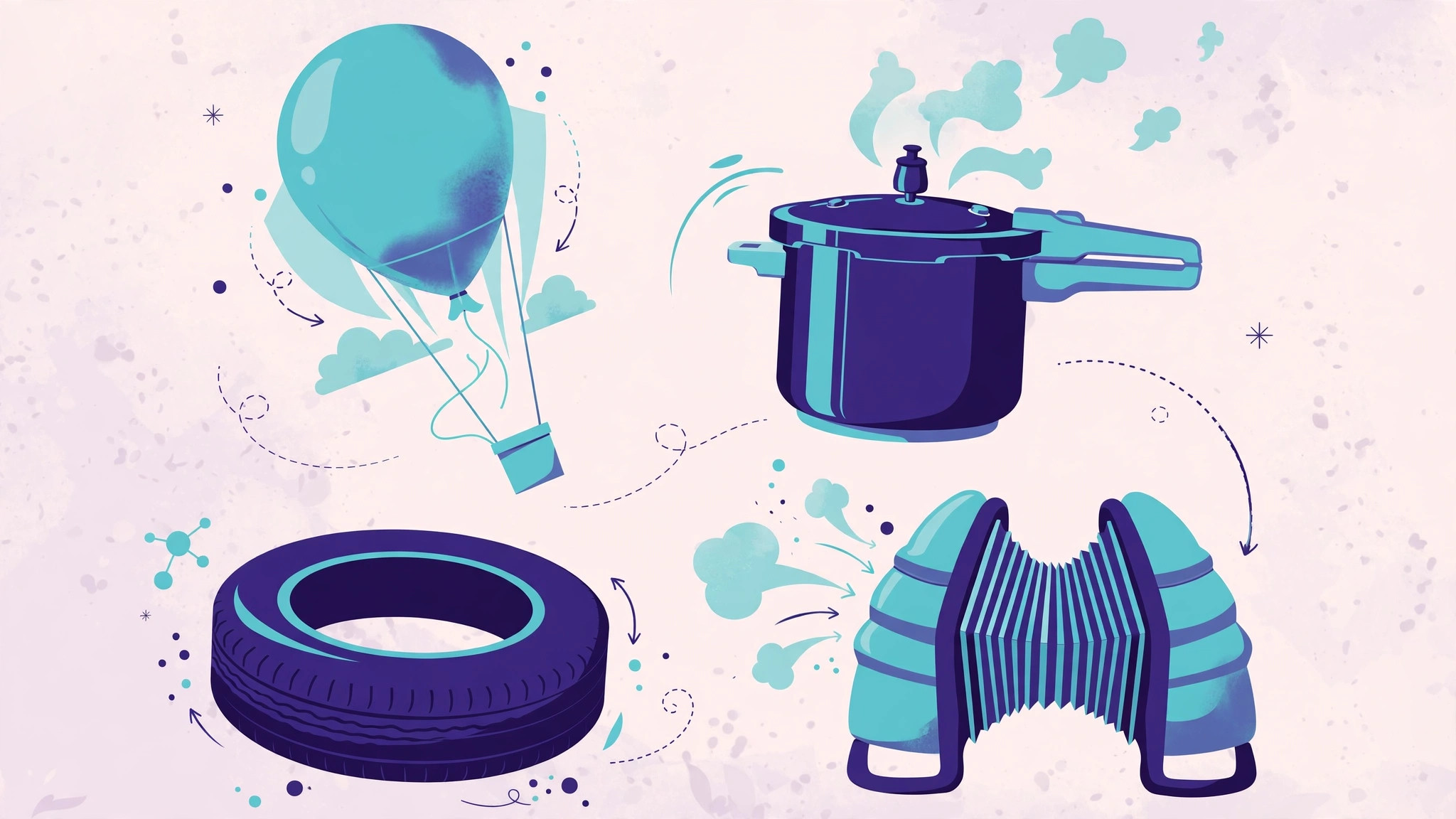
Gas Laws in Real Life: Lungs, Balloons and Tyres
The gas laws are not abstractions: lungs, weather balloons, aerosol cans and car tyres all obey them daily. A tour of the laws at work around you.
Read the guide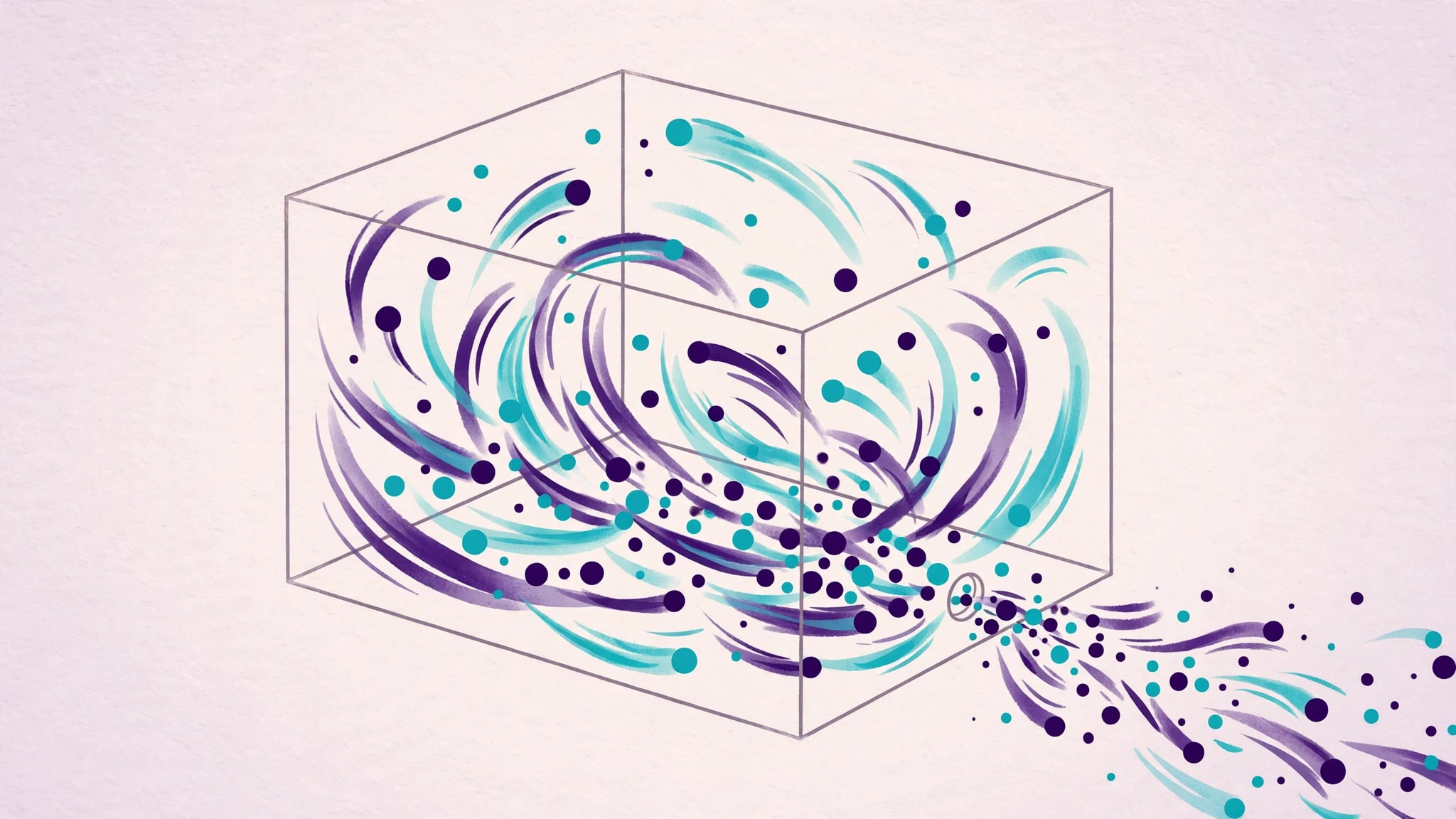
Kinetic Molecular Theory: Pressure Is Collisions
Kinetic molecular theory explains gas behaviour from the motion of particles: pressure is collisions, temperature is average kinetic energy, and the gas laws follow.
Read the guide
Enthalpy Basics: The Heat a Reaction Trades
Enthalpy is the heat content of a chemical system at constant pressure. Exothermic and endothermic reactions, and how enthalpy changes are measured and used.
Read the guide
Activation Energy and Catalysts: The Hill and the Pass
Reactions must climb an energy hill before they can run. Activation energy, and how catalysts offer a lower pass without being consumed.
Read the guide